ENG

FR

IT

SP
ENG
FR
IT
SP

Aerated concretes are a variety of porous concretes: they are made by injecting a gas-forming agent (usually aluminium powder) into a mixture consisting of a binder component (such as Portland cement or ground quicklime), a siliceous component (ground quartz sand) and water. The gas-forming process takes place as a result of a chemical reaction between calcium hydroxide and aluminium: the hydrogen escaping during this reaction causes the solution to foam, which then hardens, maintaining a porous structure. For the production of products made of aerated concrete with rapid hardening and the required strength factors, the products are subjected to heat and humidity treatment in autoclaves at a vapour pressure of at least 9 atmospheres and a temperature of 175°C. | 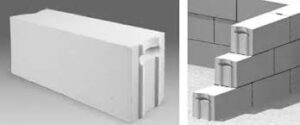 | |
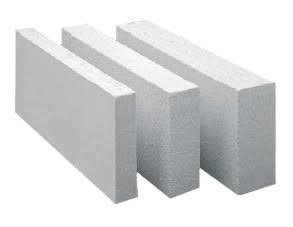
1.1. SENSITIVE WALL BLOCKSIt is used as interior and exterior file wall material in structures such as reinforced concrete, steel, wood and prefabricated systems, as carrier exterior and interior wall material in heavy works.
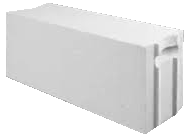
1.2. PROFILE WALL BLOCKIt is used as interior and exterior file wall material in structures such as reinforced concrete, steel, wood and prefabricated systems, as carrier exterior and interior wall material in heavy works.
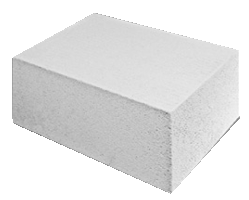
| 1.3. FILLER BLOCKS It is also used as filling material in hollow tile slabs. It is preferred in hollow slabs because it is light, fireproof and provides thermal insulation.
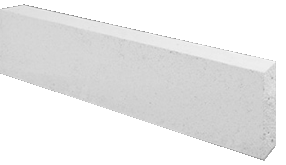
1.4. LENTOLentos are used to close the openings on doors and windows. Jambs are also used in door and window corners. reinforced concrete lintels AAC lintels are preferred because they provide thermal insulation. | |